Kennesaw State University · Course
Visual Imagination
A foundations-of-design course on how line, color, form, texture, and light shape a viewer’s emotional response in the theatre.
Overview
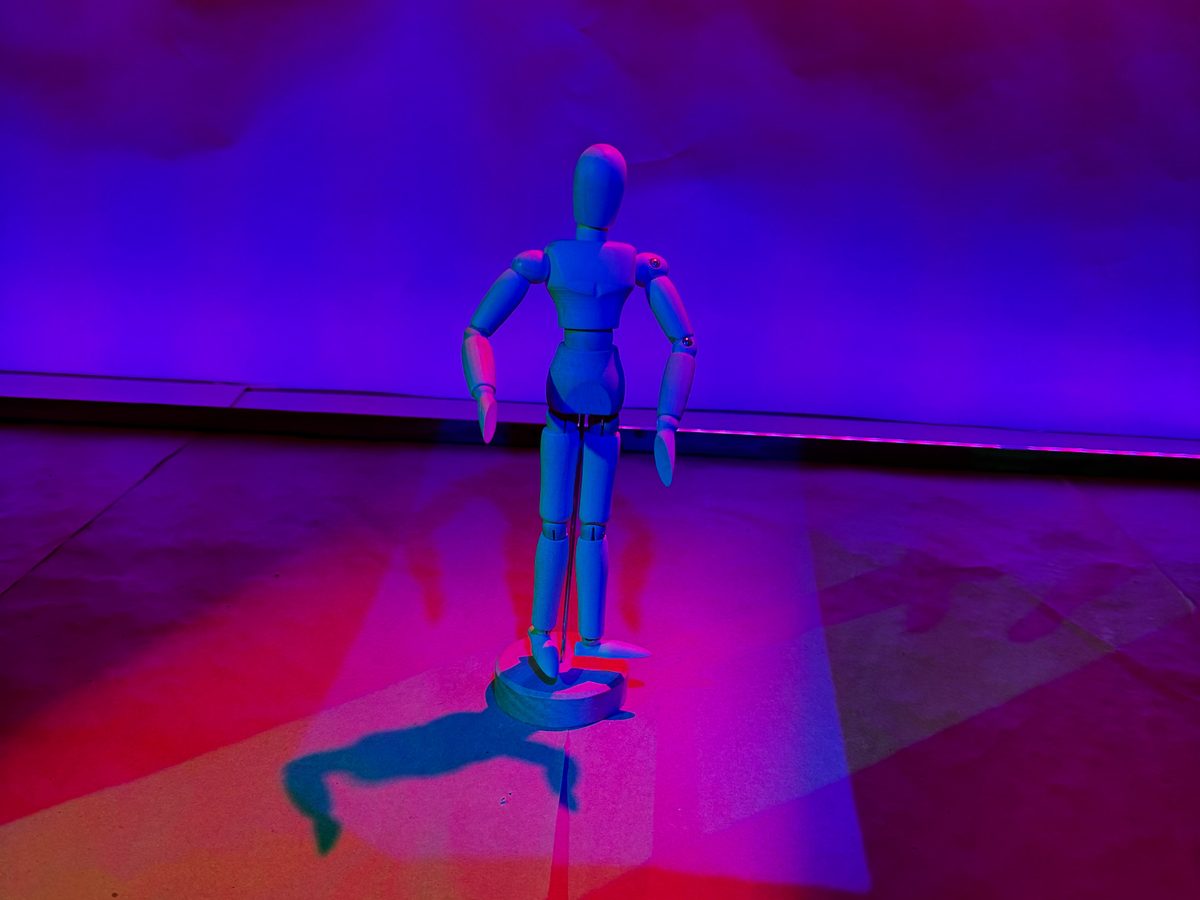
Why is a diagonal line dynamic, and a horizontal line reassuring? Why does red feel hot and blue feel cold? Visual Imagination takes students on a journey to discover the principles of visual design, focused on the ways theatrical artists manipulate line, form, space, texture, and color to shape an audience’s emotional response.
The course weaves lectures, discussions, and a sequence of hands-on projects into a scaffolded structure: each project builds on the last, so by the end of the semester students have produced a body of design work and the language to talk about it. Visual Imagination paves the way for a better understanding and appreciation of the visual aspects of the art of theatre.
Course objectives
By the end of the semester, students will be able to:
- Identify key concepts, techniques, and processes in visual design and demonstrate understanding through exam, creative, and analytical work.
- Manipulate design elements and principles to create unified, meaningful visual images.
- Solve practical problems pertaining to two-dimensional and three-dimensional designs.
- Research and analyze creative works from multiple cultures in their historical, socio-cultural, and aesthetic contexts.
- Apply critical thinking and aesthetic principles to evaluate the visual elements of creative works.
- Analyze plays from the perspective of a theatrical designer.
- Translate other forms of work, such as music or writing, into a visible form of art.
- Use visual presentation tools effectively, and demonstrate professional collaborative habits.
Units & topics
A scaffolded sequence: each unit builds on the work of the one before it.
-
Unit 01
What is design?
Vocabulary, the role of design in storytelling, and a working definition of design for the theatre.
-
Unit 02
Lines
How direction, weight, and rhythm of line communicate emotion, and a hands-on Lines project.
-
Unit 03
Color
Color theory, perception, and a Color project translating mood into palette.
-
Unit 04
Form & Texture
Two- and three-dimensional shape language, surface, and the Form & Texture project.
-
Unit 05
Painting with Light
How light functions as a design element on the stage, building toward the Painting with Light project.
-
Unit 06
Sound
Sound as a design partner to the visual world, and the Sound project translating audio into image.
-
Unit 07
Final design project
A capstone synthesis project drawing on every element introduced in the semester.
Assignments & projects
Student work samples are shared with permission.
-
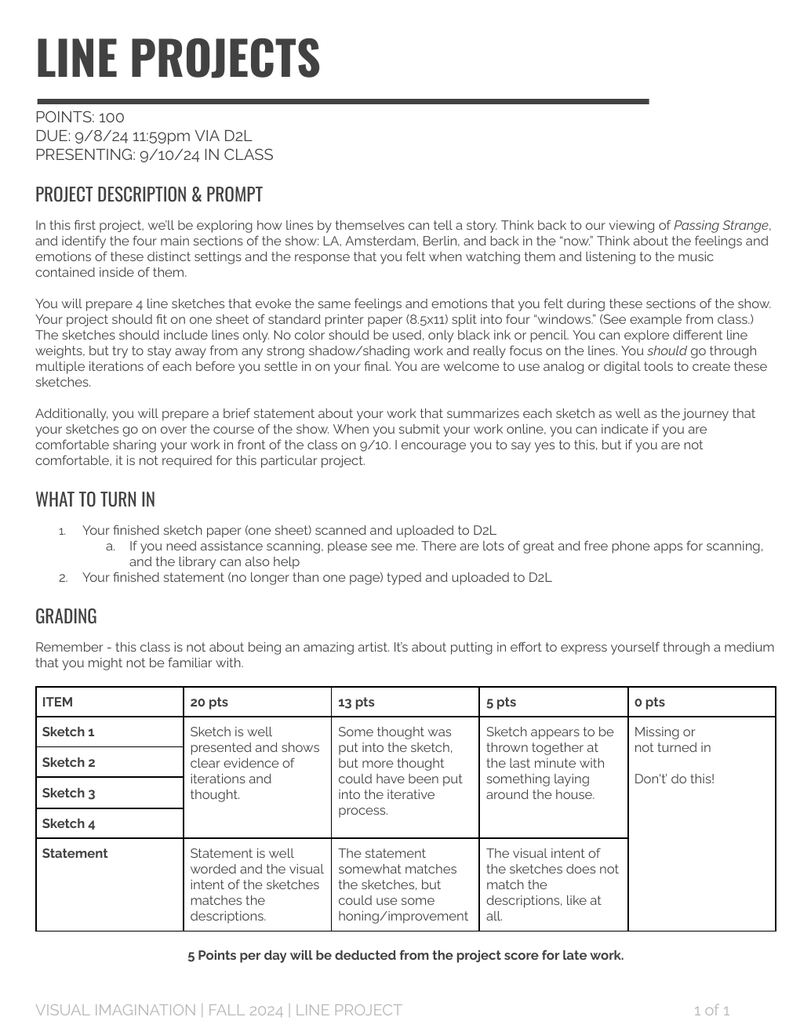
Lines project
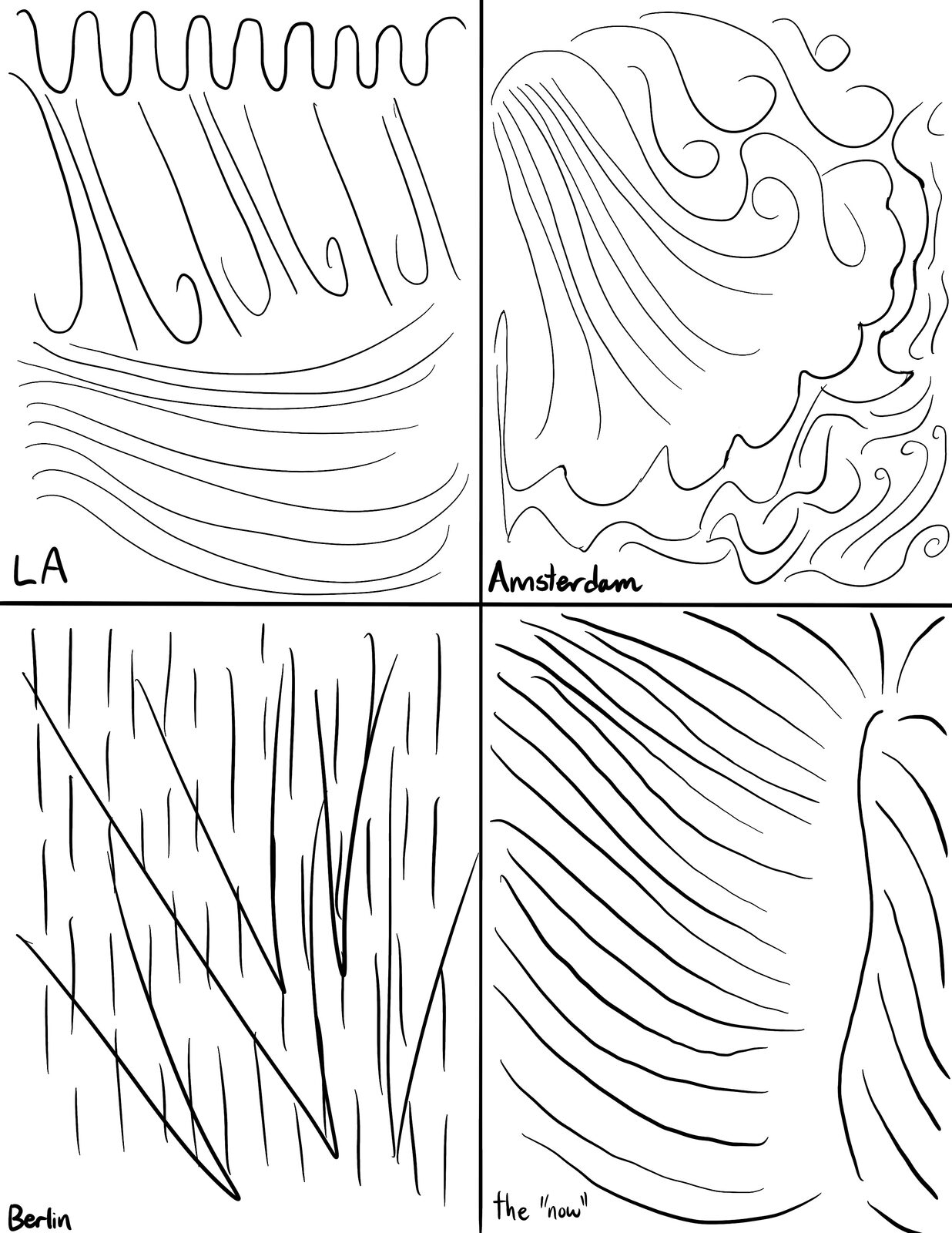
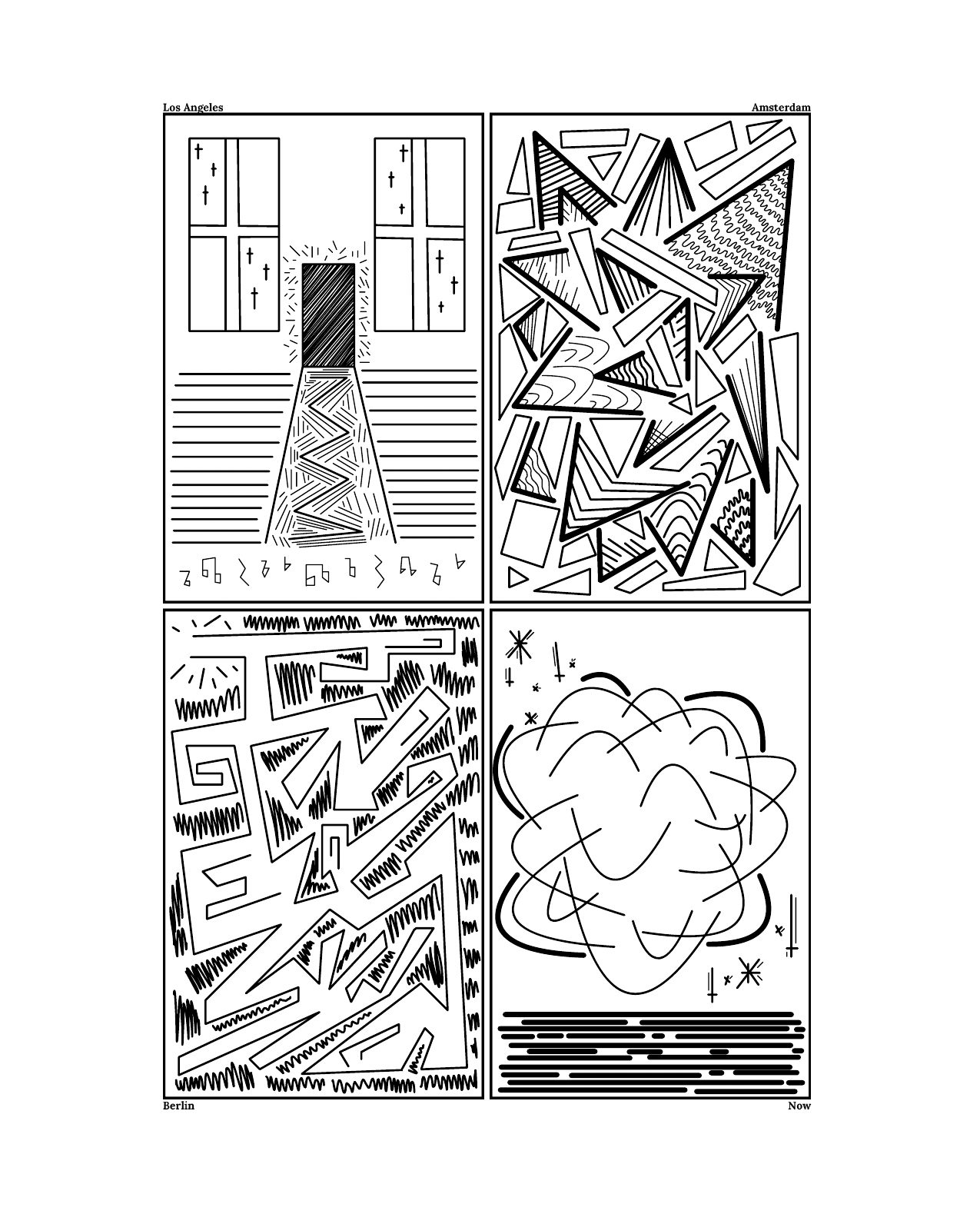
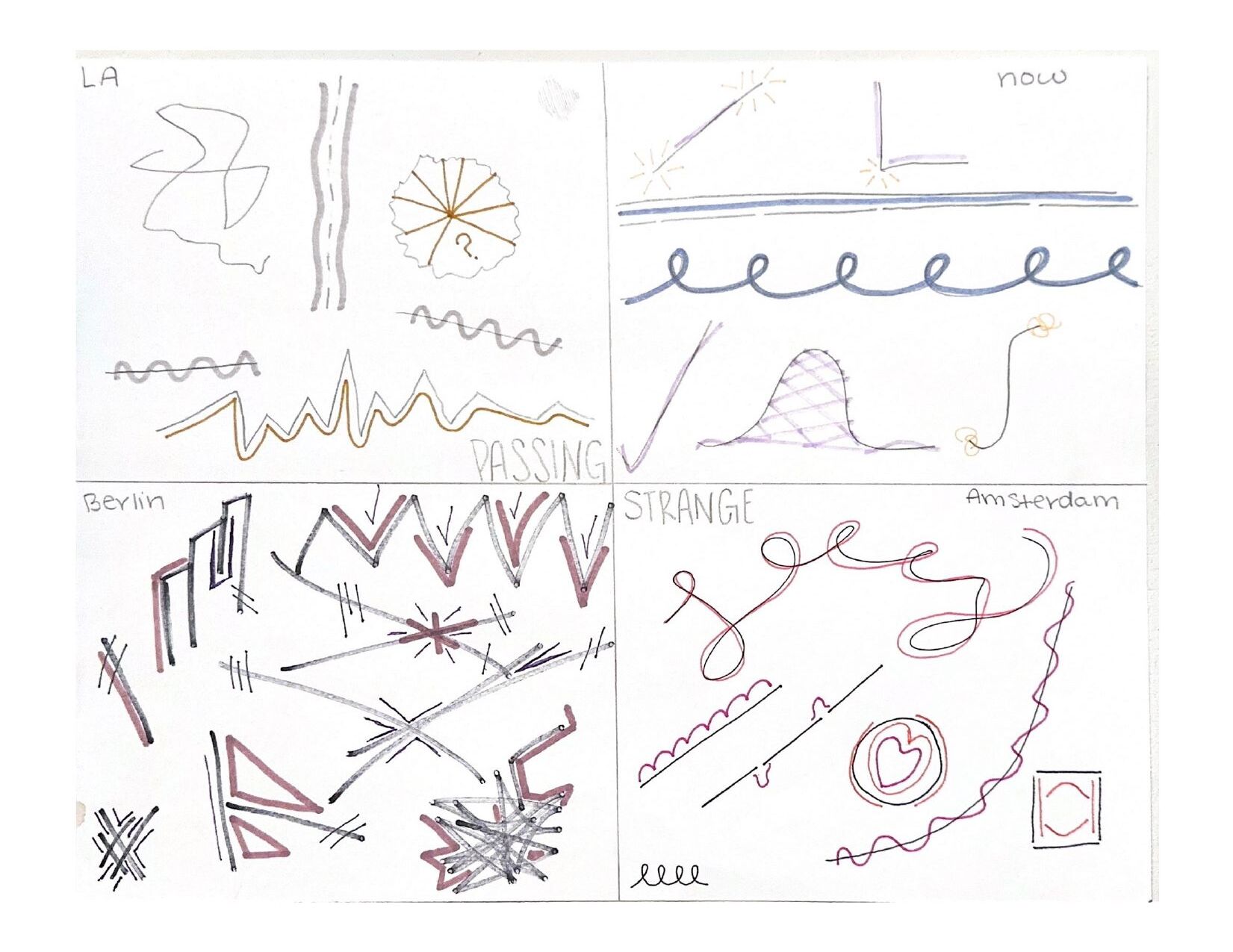
Four line-only sketches that evoke the four sections of Passing Strange (LA, Amsterdam, Berlin, and back in the "now"), laid out in a 2×2 grid on a single 8.5×11 sheet. No color, no shading; pure line weight and direction. Multiple iterations expected before settling on the final.
What to turn in
- Scanned sketch sheet uploaded to D2L
- One-page written statement summarizing the journey across the four windows
Student work
-
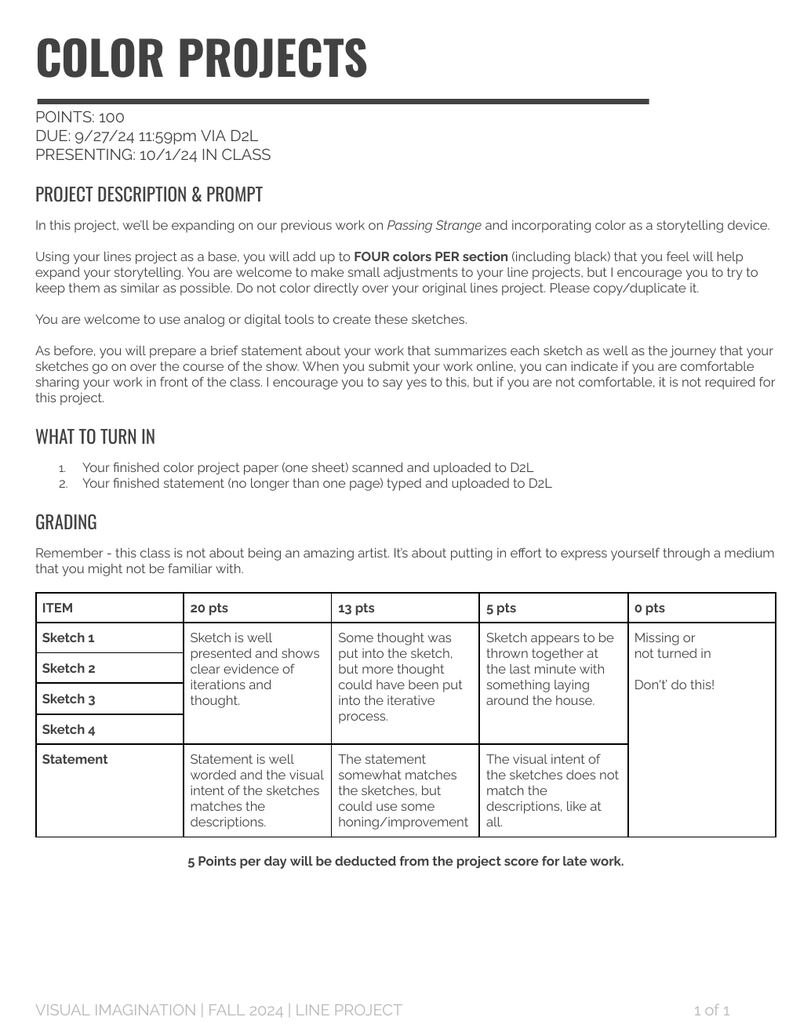
Color project
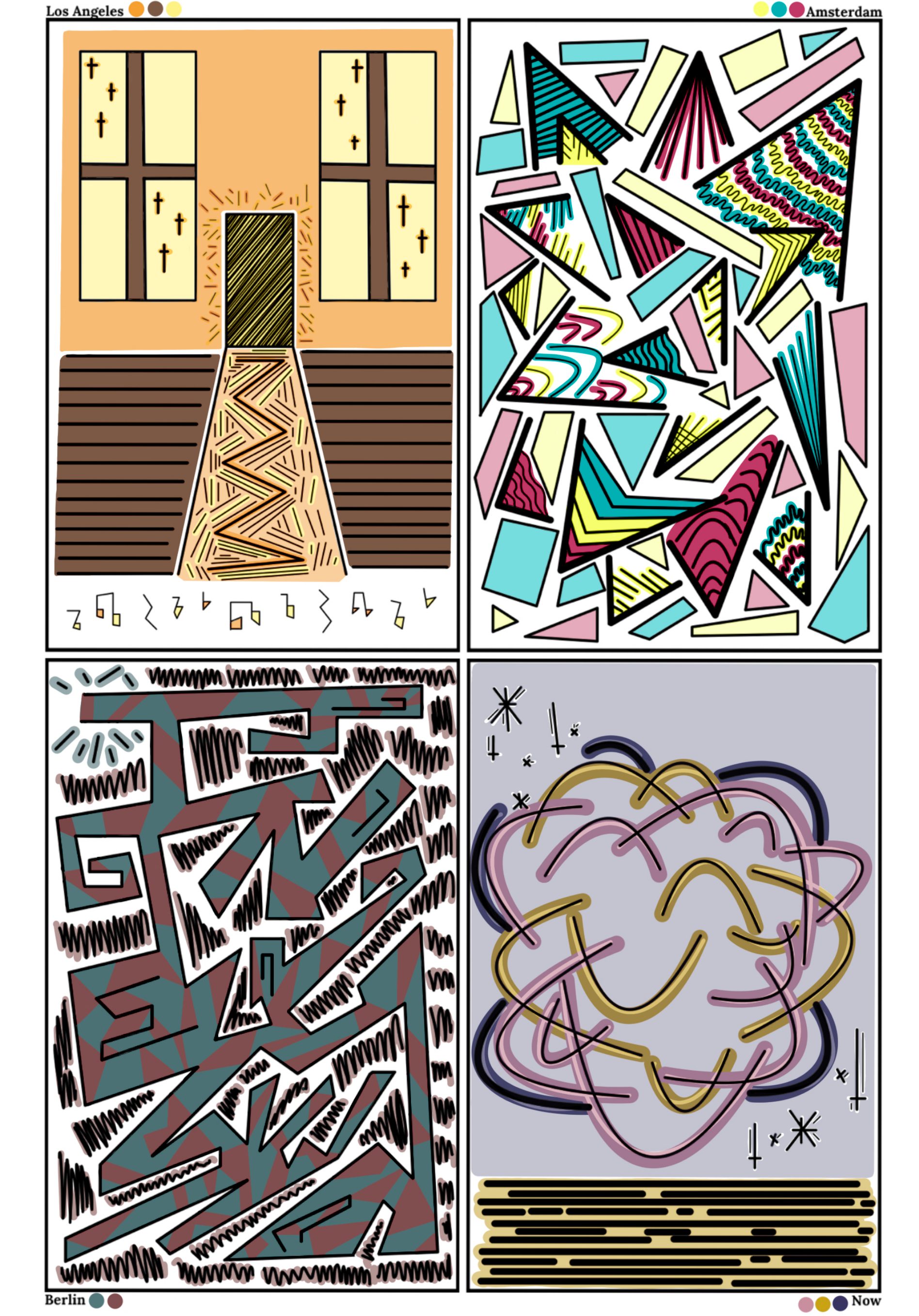
Building on the Lines project: add up to four colors per section (including black) to expand the storytelling. Students duplicate their lines work rather than coloring on top so the through-line stays legible.
What to turn in
- Scanned color project sheet uploaded to D2L
- One-page written statement
Student work
-
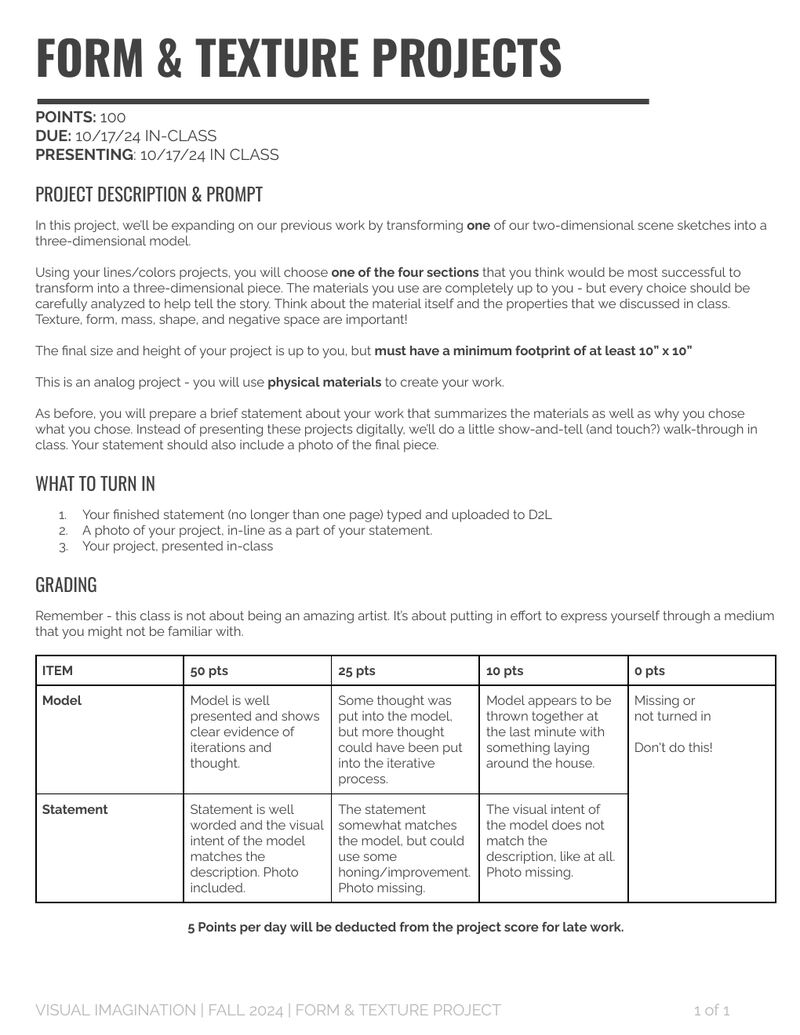
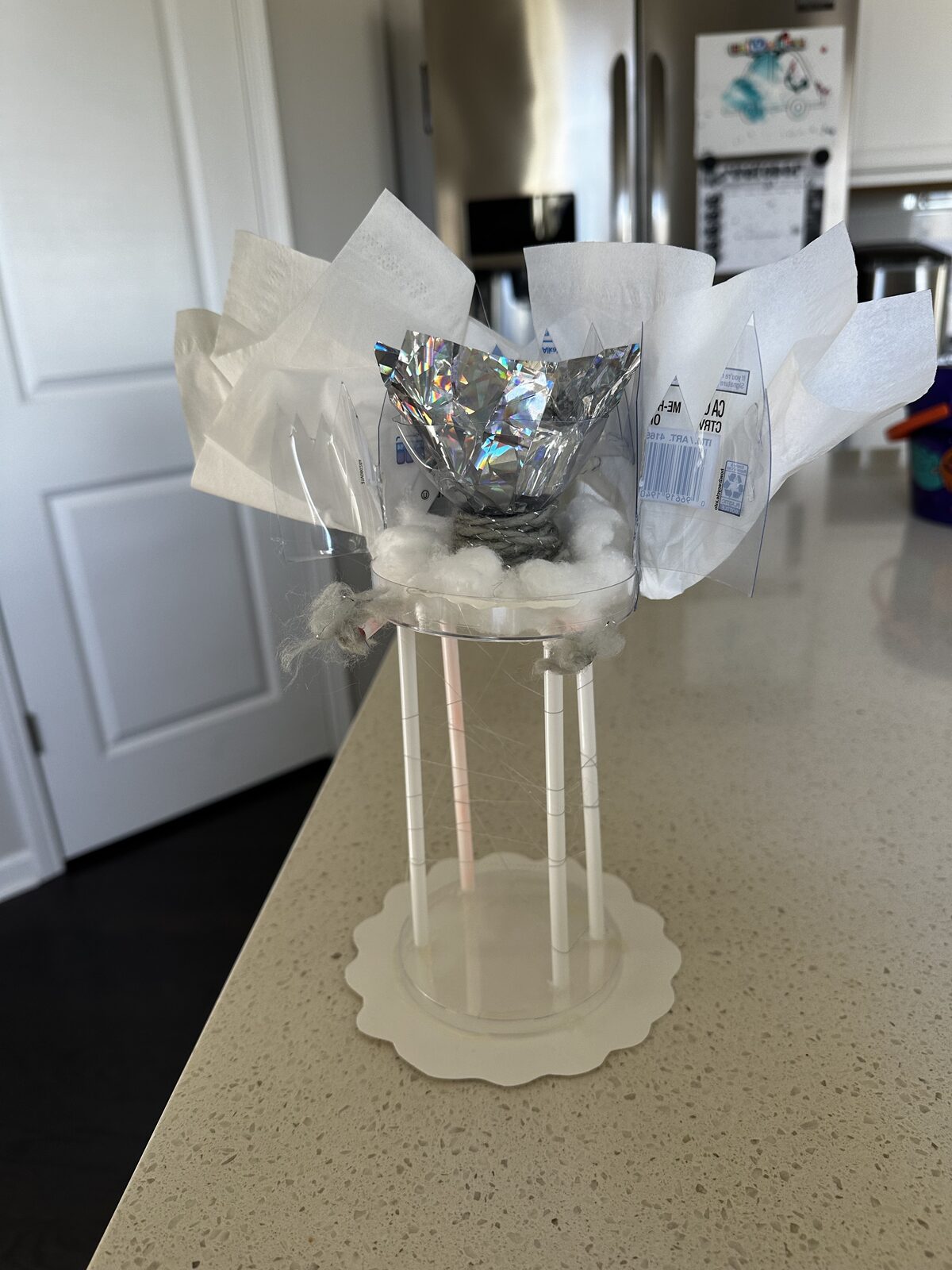
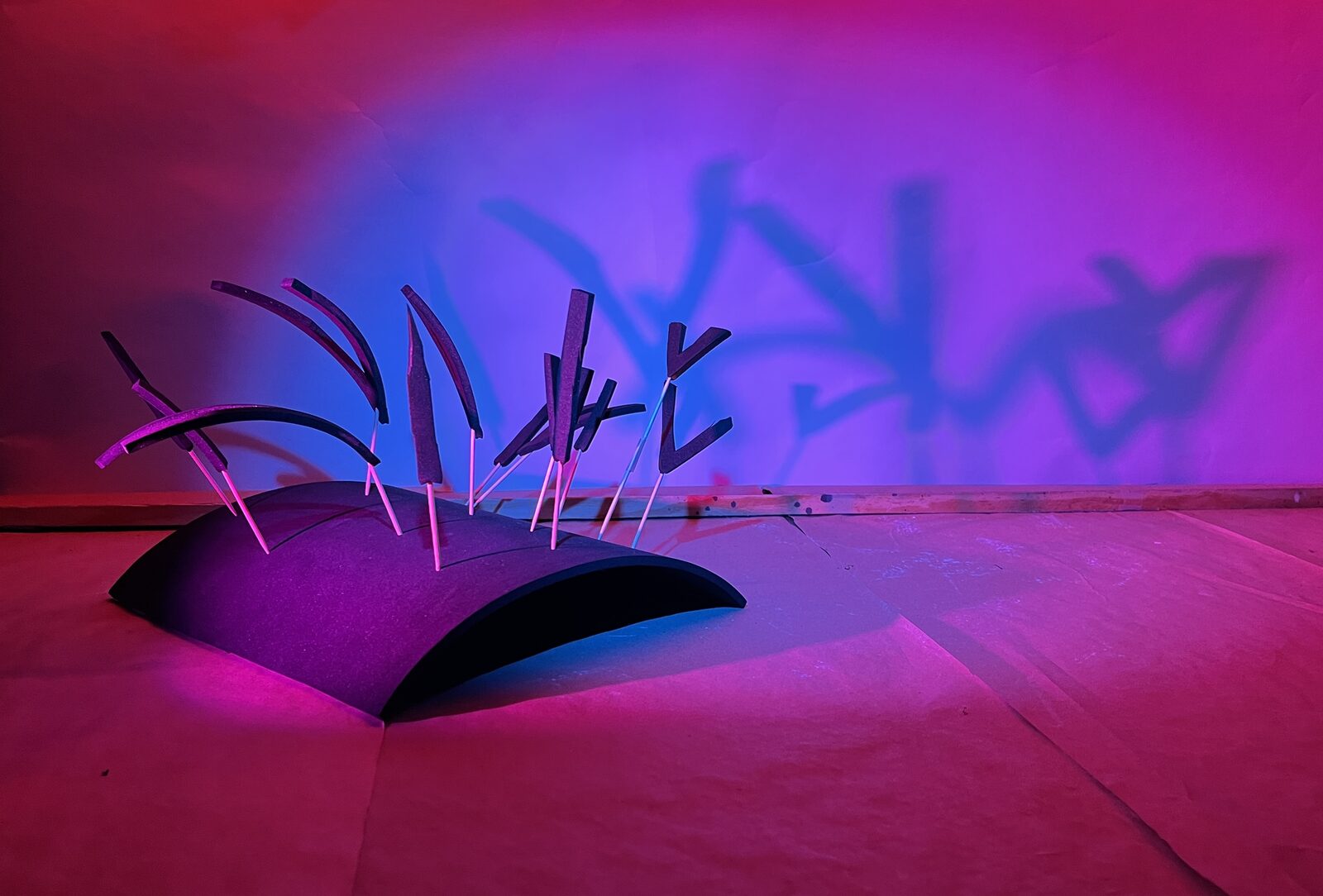
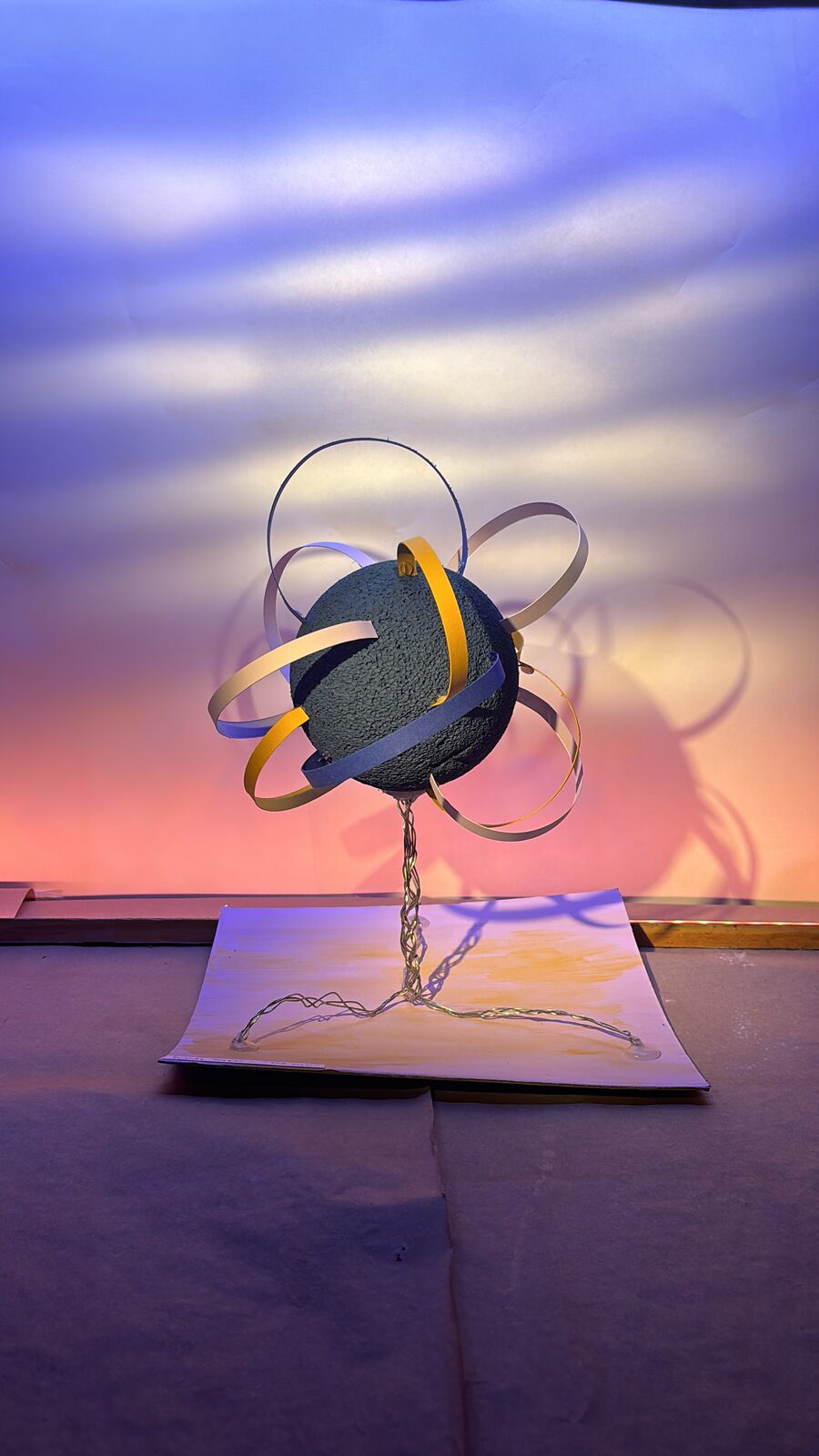
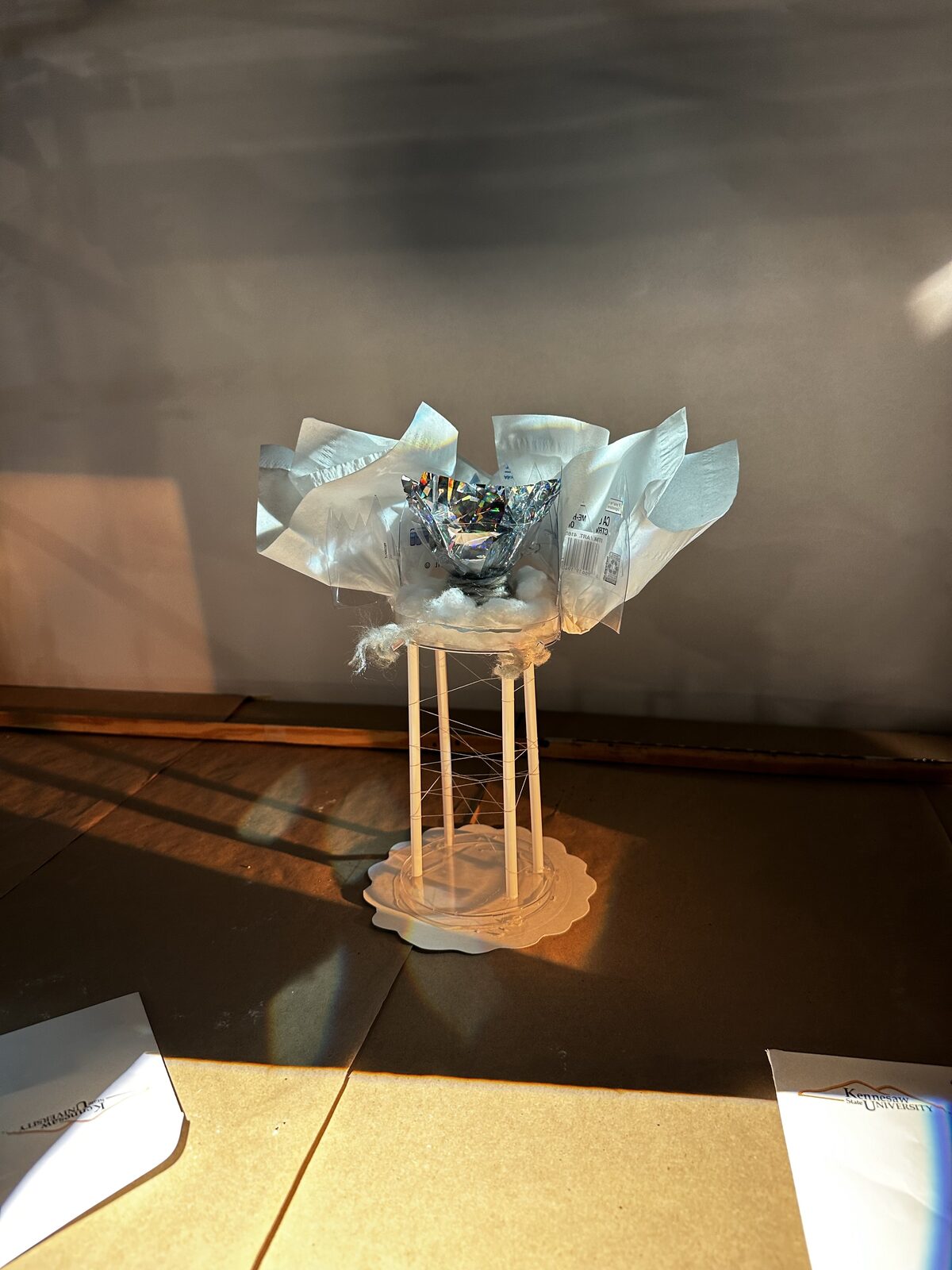
Form & Texture project
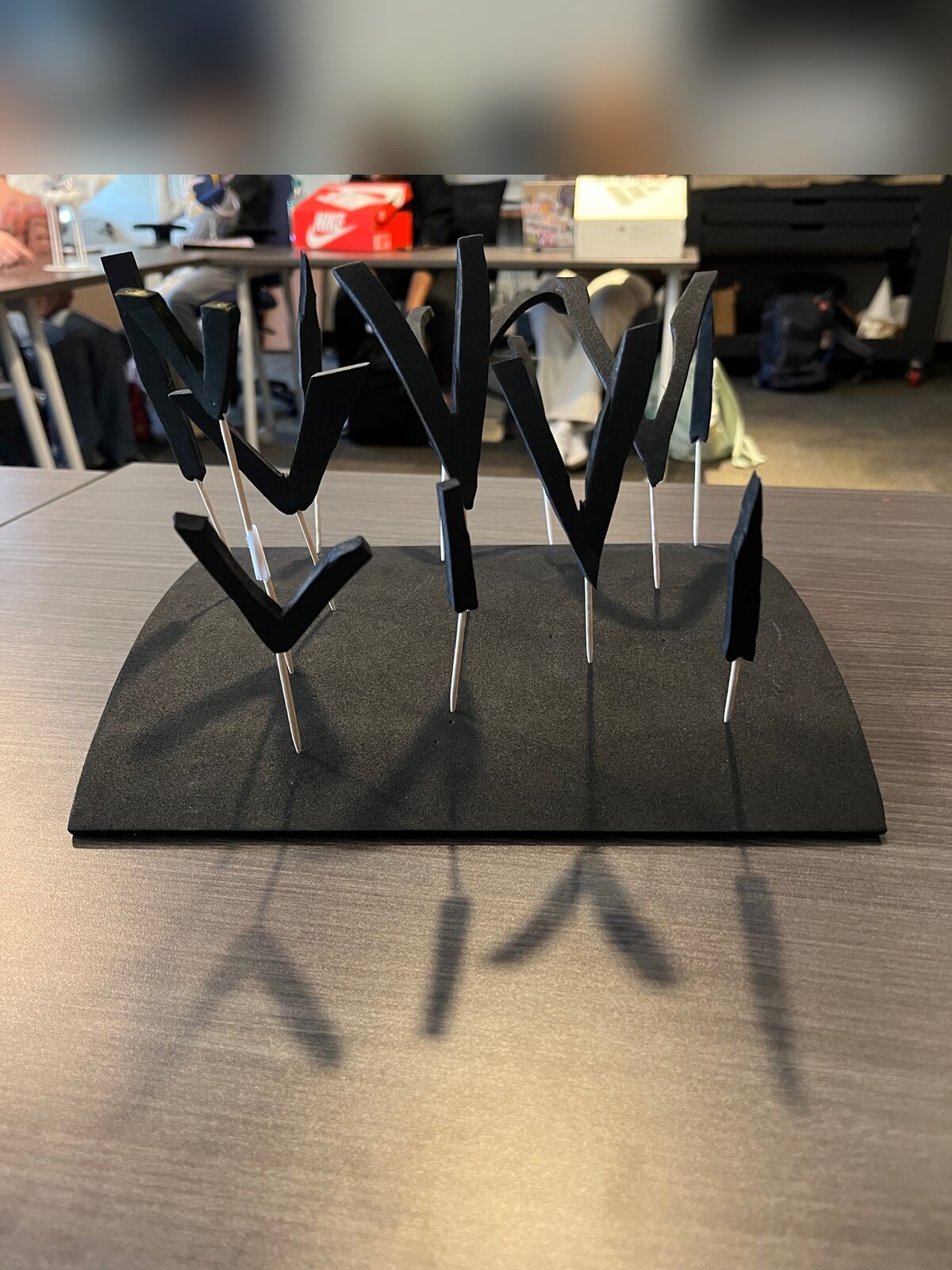
Pick the most-promising of the four sections and build it as a three-dimensional analog model. Minimum 10″×10″ footprint. Material choice itself is a design decision: texture, form, mass, shape, and negative space all need to earn their place.
What to turn in
- One-page statement with an embedded photo of the model
- The physical model, presented in class as a show-and-tell
Student work
-
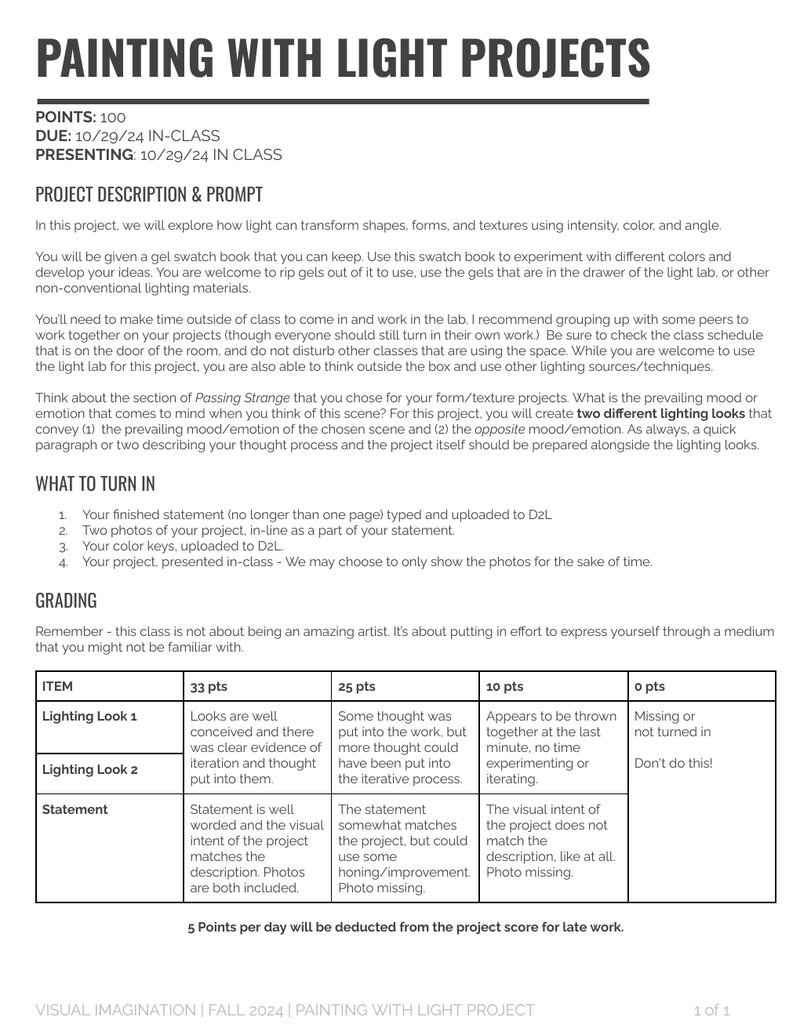
Painting with Light project
Two lighting looks for the chosen section: one that conveys its prevailing mood, and one that conveys the opposite. Students get a personal gel swatch book to keep, plus access to the light lab. Non-conventional sources are welcome.
What to turn in
- One-page statement with two embedded photos
- Color keys uploaded to D2L
- In-class presentation of the looks
Student work
-
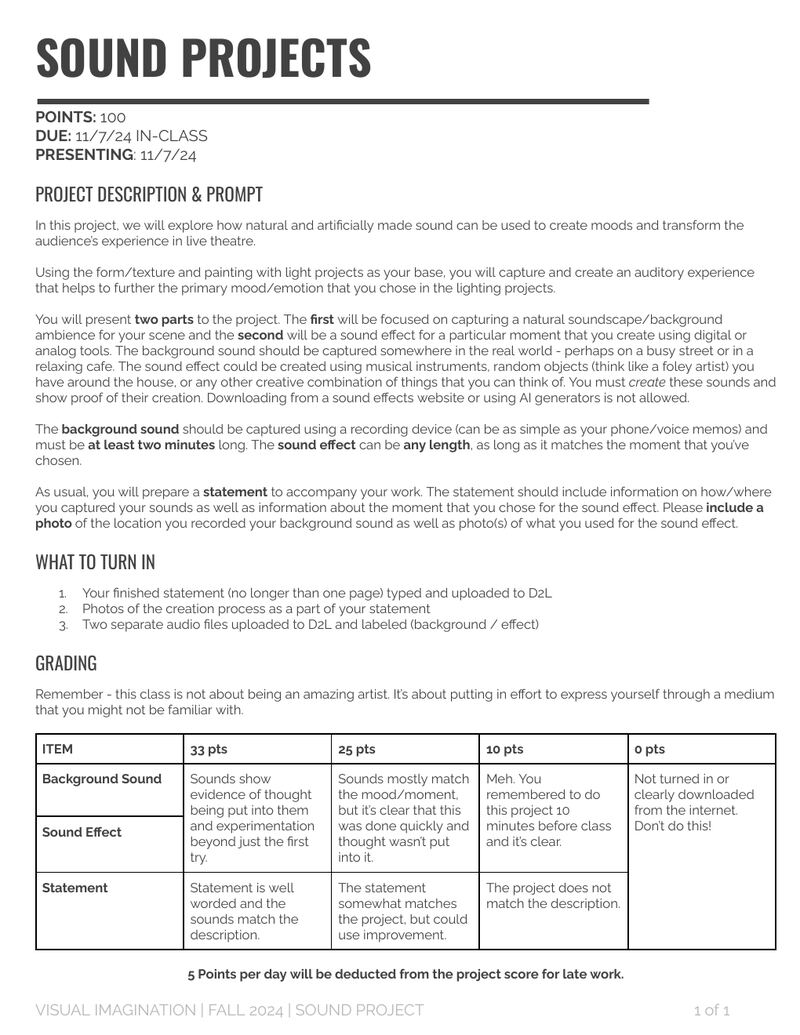
Sound project
A two-part auditory experience for the chosen section: a captured 2-minute background ambience from the real world, and a created sound effect for a specific moment. No downloaded sounds; no AI generators. Students must show evidence of the creation process.
What to turn in
- One-page statement with photos of the recording / creation process
- Two labeled audio files (background + effect)
Student work
-
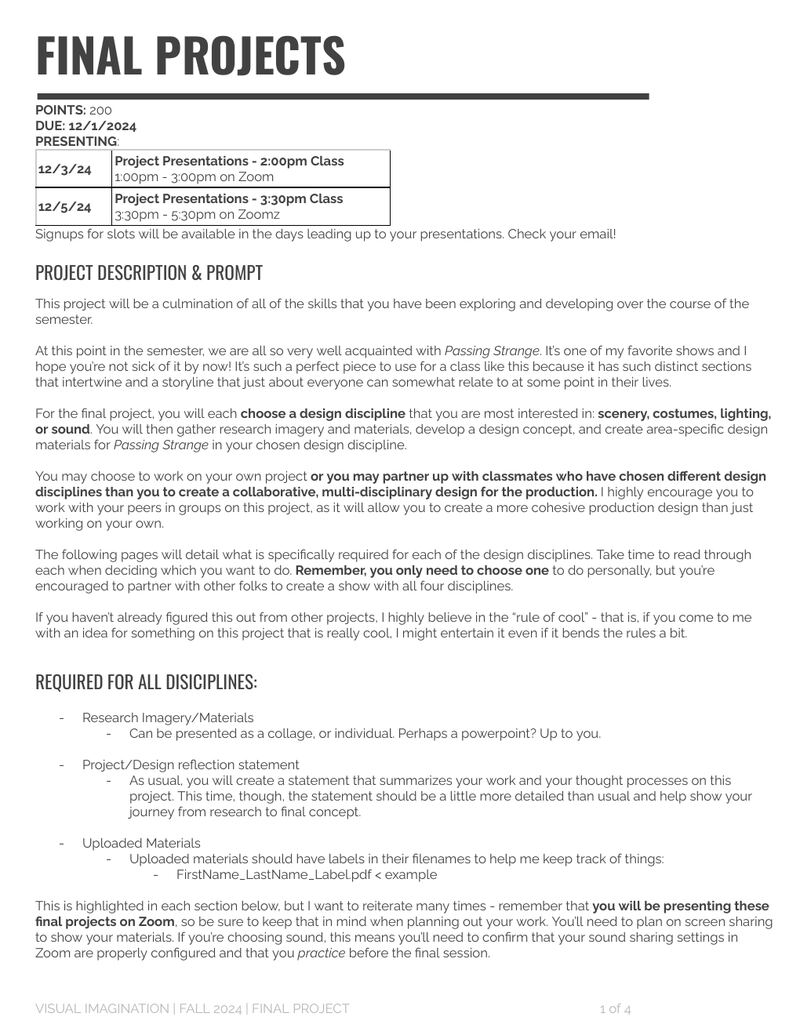
Final project
Choose a design discipline (scenery, costumes, lighting, or sound), research the show, and develop a full design concept for Passing Strange. Students may work solo or partner with classmates from other disciplines for a multi-disciplinary production design. Brief covers discipline-specific deliverables for each track.
What to turn in
- Research imagery / mood boards (collage, deck, or document)
- Discipline-specific design materials (sketches, renderings, models, cue sheets, audio files, etc.)
- Detailed reflection statement tracing research through final concept
- Zoom presentation in the final session
Student work
Required materials
-
Required reading
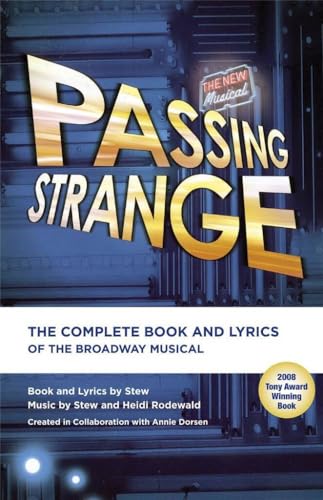
Visual Literacy for Theatre
-
-
-
Student galleries
-
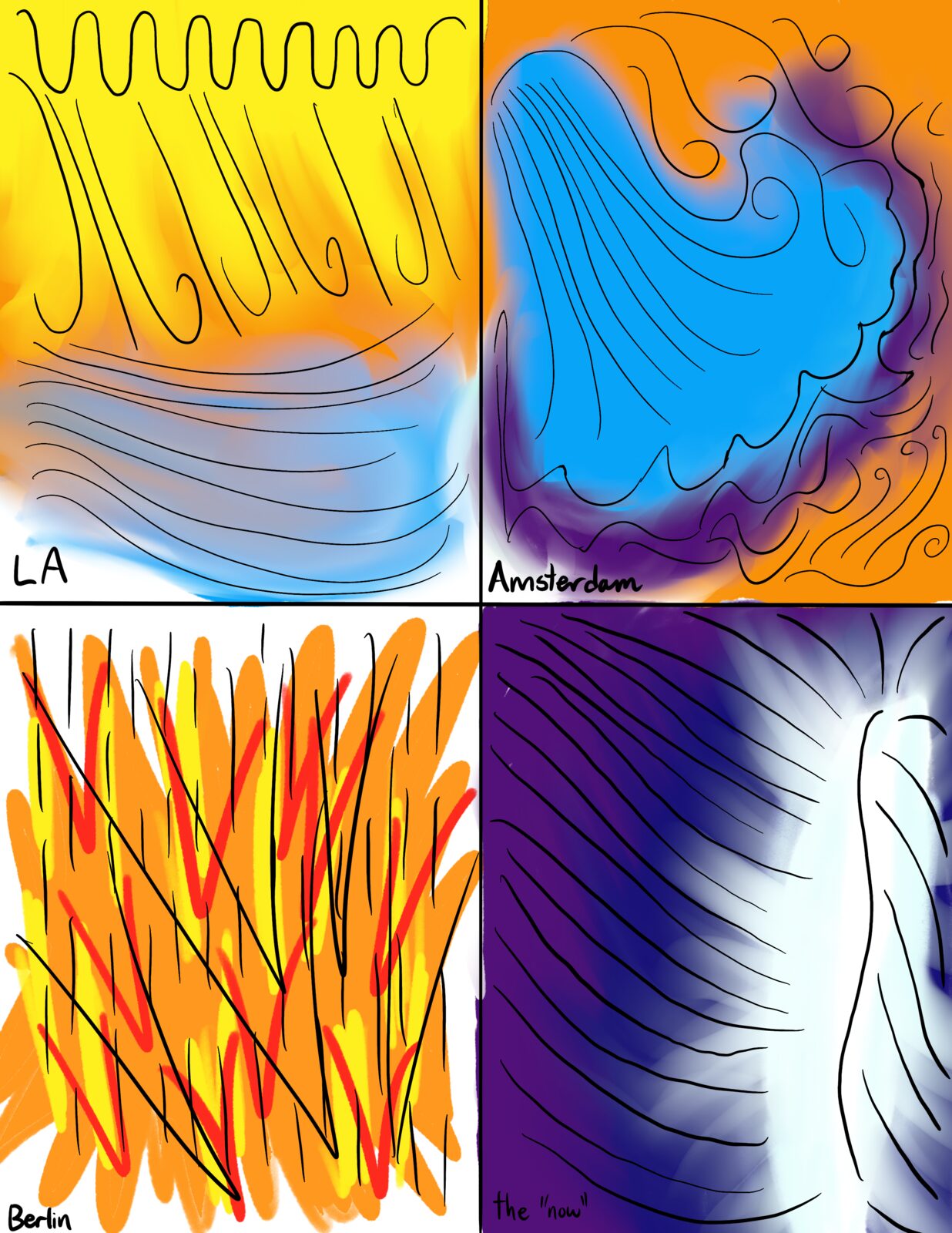
2024
Jacob Anderson
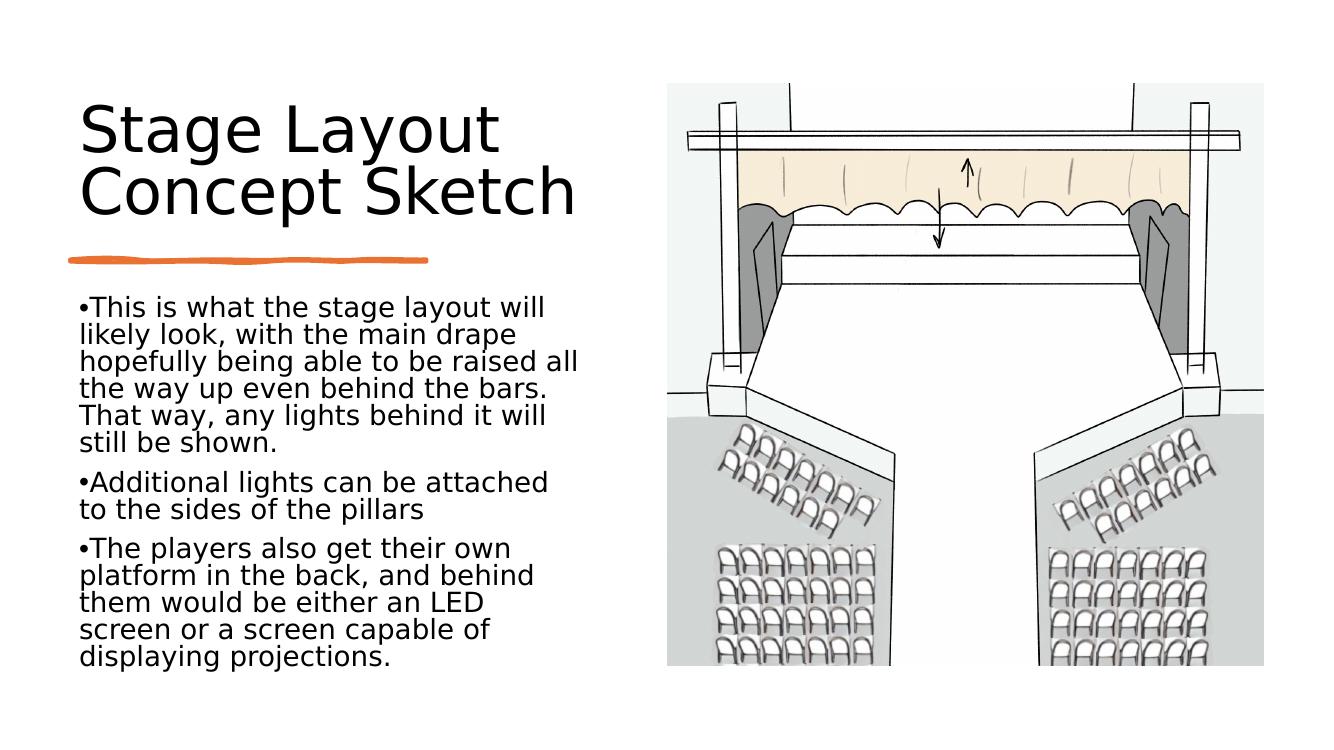
Built his semester arc around Berlin and the rock-concert energy of the show. His final scenic design pitched a thrust stage with raised musician platforms, a flyable main drape, and a projection screen behind the band, aiming to recreate the feeling of a live rock concert.
View progression →
-
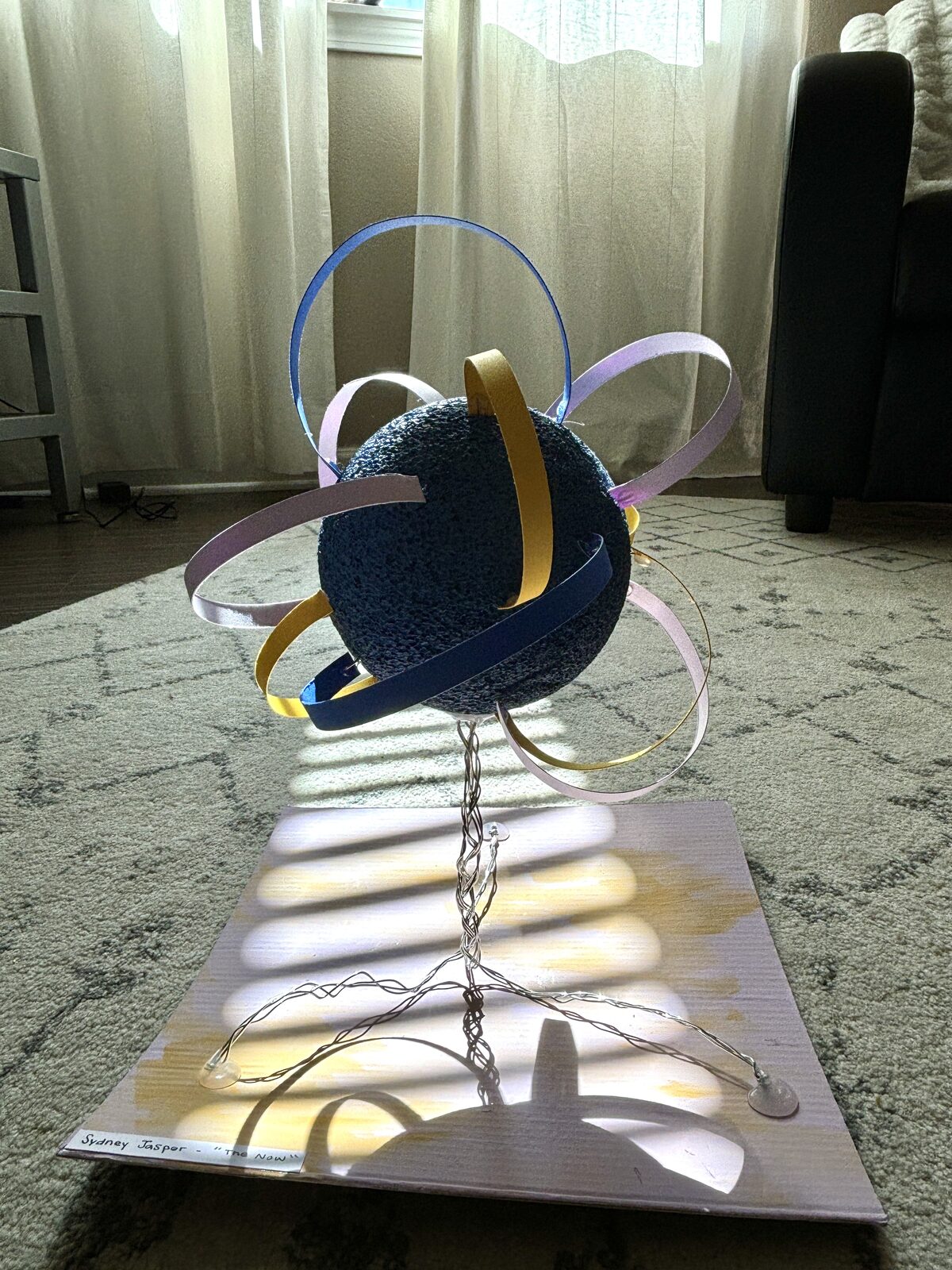
2024
Sydney Jasper
Took the course in Fall 2024. Strong, intentional visual style across every assignment, reading clearly as a single hand from Lines through Painting with Light.
View progression →
-
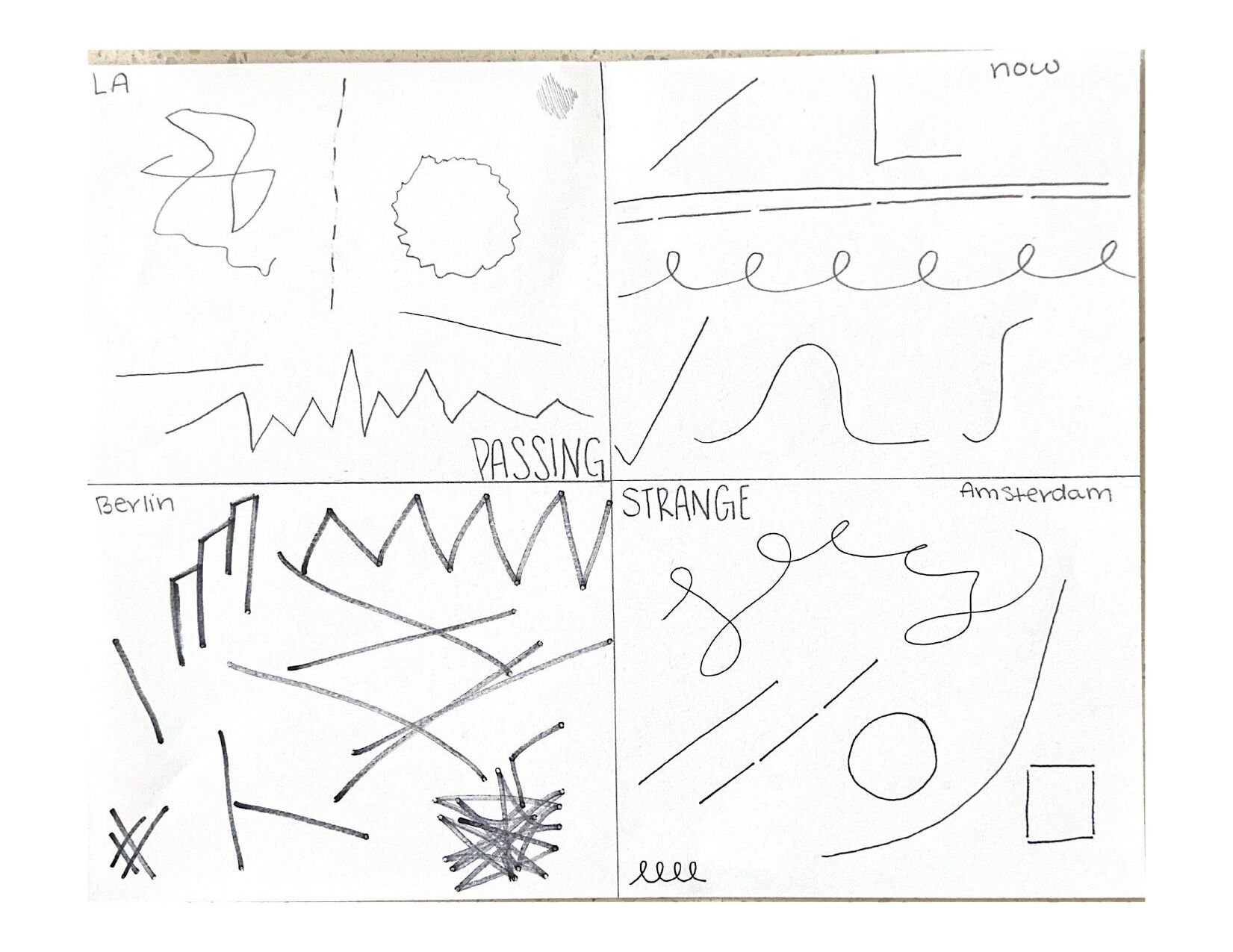
2024
Livia Stetson
Built her semester arc around the LA section of Passing Strange, threading the same set of choices from the Lines project all the way through her Painting with Light treatment. Captions below are pulled from her reflection statements.
View progression →
Other courses
More from Mike's appointment at Kennesaw State.
-
Spring
Stagecraft
A high-level tour through the disciplines of technical theatre, building shared vocabulary, hands-on skills, and an awareness of the careers behind a working production.
View course →
-
Fall
Special Topics: Eos Programming
An in-depth console-programming course on the ETC Eos family, with a heavy parallel track on production networking, show control, and timecode.
View course →
-
Spring
Special Topics: Production Software
A working tour of the digital tools a modern production team uses, from FileMaker and Lightwright through QLab, Vor, network tools, and a closing build-your-own NodeRED unit.
View course →