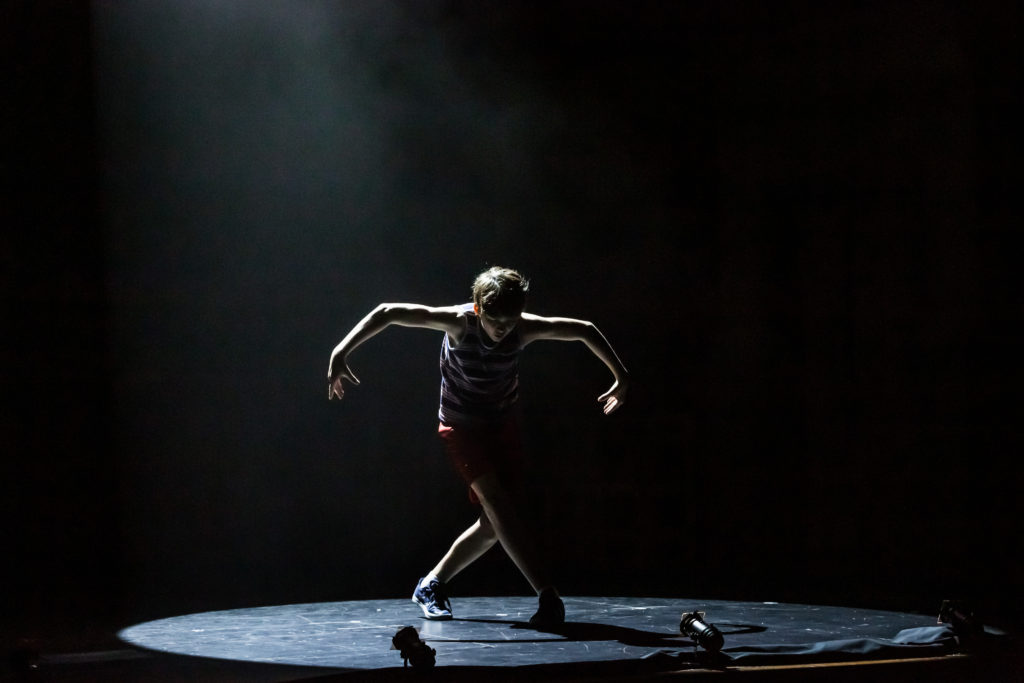
Owning The Darkness
Embracing The Shadow
When I teach about the "functions of light," I prefer to say "Providing Selected Visibility" instead of just "Providing Visibility." That is, what we don't see has equal importance to what we do see. I find that shadows can often tell us more than light. In the last few years, I've been exploring deeper into creating intentional and specific shadows in my work. Today's post explores examples and the through line across several different types and genres of shows in my portfolio.
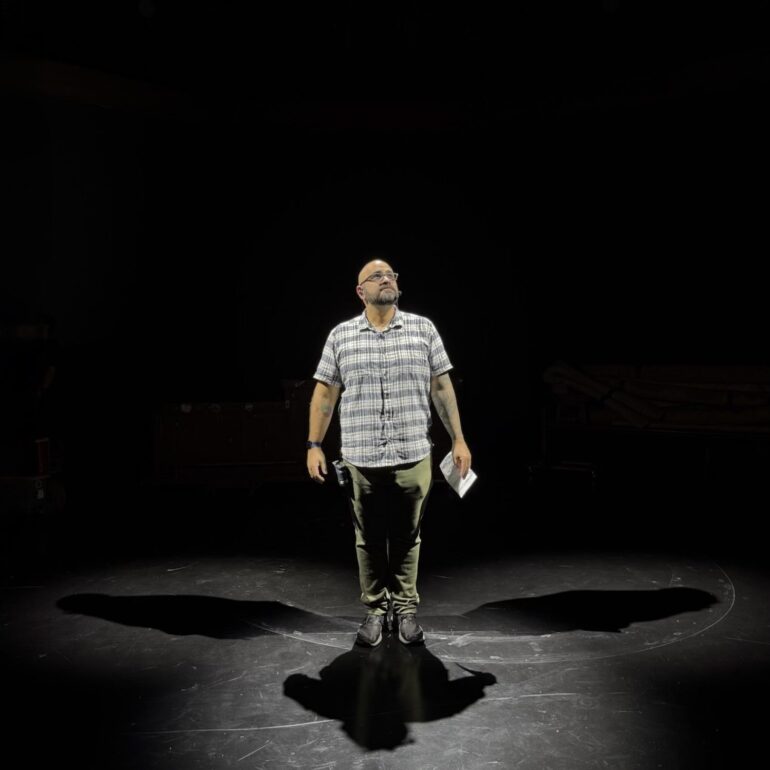
In stage lighting, a common response to a shadow is to add more light. To eliminate the void. We are naturally afraid of darkness and shadow, because that's where the unknown lives in our daily lives, both physically and mentally. While the natural instinct to seek out light is understandable, I think that as lighting designers, we should make sure to embrace the shadow as another important tool in our toolbox.
As I started to think about how I wanted to talk about shadows, I kept coming back to a central question: Who owns the shadow? Today's post will explore three possible owners, as well as when the owners sometimes share custody.
Over the years, I've started thinking about shadows in terms of ownership. At any given moment on stage, I ask; Who owns this shadow? Is it the space – creating architecture and boundaries? Is it the character – revealing emotions and subtext? Or is it the moment itself – directing focus to what's happening right now?
Owner #1
The Space
The space is architectural. Much of my work features the use of light to create architecture, both in beams as well as in visible lighting instruments themselves. Sometimes entire lights, sometimes just the lenses. Strong directional light can reinforce walls, lines, scale, and boundaries in a somewhat intangible way. Take, for example, the above photo from a recent production of Tell Me On A Sunday. In the photo, a single instrument is zoomed as wide as possible to cast a long and powerful shadow. The light feels all-encompassing and overwhelming. The character is engulfed in the beam, engulfed in the space, and her shadow trails long behind her as she walks upstage. The closer she gets, the longer the shadow. It's almost musical, like a sustained note that is getting longer or a decrescendo as the light gives way to the dark. The beam is carefully shaped to fit inside the playing space, not spilling over into the aisle, which serves to define location and provide a container.
An incredibly important detail for moments like these is a single primary source of light. This ensures that the shadow is able to be solitary and crisp. We don't get multiple angles and sizes, just the one, following our character throughout. I tend to be obsessed with how many shadows are being cast in isolated moments like these, sometimes to the point that I would rather sacrifice the brightness gain I may achieve by adding additional sources in favor of the single crisp shadow on the floor or on the wall.
Owner #2
The Character
Another potential owner of the shadow is the character. In this photo from Jersey Boys, the characters each own their shadow. At this moment, Frankie is choosing between his wife and his band. Take careful note of the shadows. The band shadows are small, cast by a tightly focused top light reminiscent of a streetlight (ever-referenced in the show as a symbol of the band's origins.) Frankie and Mary's shadows, on the other hand, are long. They are created by a far back diagonal light source. The smaller / more focused shadows from the band members represent the "easy" path. They are cohesive, short, and sharp, whereas Frankie and Mary's shadows are separated and long. Because of the angle of the light, we also get different effects from the haze particles in the air. The diagonals shine through, whereas the top light on the band isn't as visible.
Unlike the earlier photo from Tell Me On A Sunday, we are dealing with multiple sources in this case. The shadows are separate, yet tell the same story. They represent the bond between the characters that is breaking. Moments before this photo was taken, the blue pools actually overlapped more, creating a wide band of diagonal back light that bridged the gap between Frankie and Mary, whose shadows were more amorphous and blended together. In that moment, the space once again owned the beams and their associated shadows. As the song ended, ownership of the beams and shadows transferred to the characters as they zoomed in and isolated, leaving us with the striking image with so much subtext in the shadows as the space receded to the background and the characters came to the foreground.
Owner #3
The Moment
Finally, the moment itself can own the shadow. In the above photo from Lysistrata Jones, the use of a single central back light with a sharp edge directs the audience's focus precisely where we want it to go. The contrast created signifies the importance of the moment, which in this particular case is bigger than the characters themselves. All eyes are on them. The space doesn't own this shadow or this beam, they exist on a different storytelling layer. Contrasting to the first photo from Tell Me On A Sunday, whose elongated shadow evokes a sense of longing and wonder and time passing, the short and concentrated shadows here represent the feeling of being in the now, in the moment. Similar to the feeling from Frankie's band in the Jersey Boys photo, the shadows convey a sense of cohesiveness.
This photo also illustrates how I enjoy using lighting fixtures and their lenses as architectural elements. The noses of the Source Four LEDs that poke in through the wings are reminiscent of a stadium or arena flood lights. The light beams themselves of course help us provide illumination and color – but by exposing them to the audience's eyes, we help the set evoke a feeling of spectacle and sportsmanship. Perhaps that concept will be its own post someday soon…
A powerful lighting feature in this moment is the indirect light that is illuminating the basketball team's face. It's still the strong backlight that is creating the bounce, but it's coming off of the floor from underneath them. This is a tool that I greatly enjoy using.
I also enjoy that the shadows in this image are colored. Some of that is from the floor, but the majority of it comes from the orange top light that is present throughout the stage.
A page from the lighting plot for Lysistrata Jones — showing the side light instruments and concepts for the "stadium-feel" — lives on Scribd; an inline preview will land here once we have a local copy of the plot PDF.
Co-Ownership
Of course, not every shadow belongs exclusively to one owner. In complex moments, ownership can be shared or even transferred during a scene.
In another example from Jersey Boys, we have established our location and our mood using a single light source. This scene is towards the end of the show when the boys are working out a deal in the basement. The light source is reminiscent of what you might find in a basement – a hanging light bulb or exposed fixture. We were able to define the space using this single source. The direction of the light, coupled with the shadows it casts, then serve to further the moment. Similar to the basketball count in Lysistrata Jones, I used the bounced / indirect light off the table cloth to help light up the performers' faces. In this production, we actually changed out the table cloth from a dark one to a white one specifically to achieve this effect.
Now, this is a long scene with a good deal of powerful acting and emotion. While the single source is powerful, it is not always practical to use exclusively. Instead, what I like to do is start the scene with a strong statement like this and then slowly sneak in some additional fill lights that help to round things out over the course of the first 30 or 40 seconds. The audience doesn't notice the additional lights slowly coming in.
In this example, I would argue that the shadows are co-owned by the space and the moment. The characters almost recede behind the other two concepts. The space is clearly defined. We are in a basement, with a harsh overhead instrument illuminating the scene. The harsh intensity not only creates the crisp shadows, but also places a magnifying glass on the moment.
The Burnt Part Boys – another example of using a strong top / back source to bounce light off of the floor or scenic objects. Wow, that would really be a great post of its own… In this moment, the child characters are sharing a moment with their deceased fathers. In the 10 minutes preceding the scene, the show was in near total blackout as the characters were trapped inside of a collapsed mine.
I needed to slowly reintroduce light in order to facilitate seeing this pivotal scene, while bridging the previous and subsequent dark scenes. Using a strong top source with light bounce allowed me to accomplish this, while also creating directionality as the characters got up and moved towards their fathers.
In this example, I think that the shadows are co-owned by the characters and the moment. The space has become almost meaningless, as it disappears into the background of the moment. It could be happening in the minds of the characters, in their dreams, or right in front of us. It's not about setting, it's about the moment and how the characters react to it.
As Frances walks upstage towards her father, her shadow is cast downstage. Similar to the first image from Tell Me On A Sunday, the shadow elongates as the actor moves upstage, portraying a growing sense of mystery and longing.
Threading the framework
If you spend some time here on my website or over on Instagram, you'll see these concepts throughout many different productions.
I hope that as you work with light and shadow, this framework helps you make intentional choices. The next time you see a shadow in your work, don't immediately reach for another light to fill it in. Instead, ask: "Who should own this shadow?" The answer will tell you not just how to light the moment, but what the moment is actually about.