Learn with us
Apprenticeship Program
Applications are currently closed. Please check this page for updates.
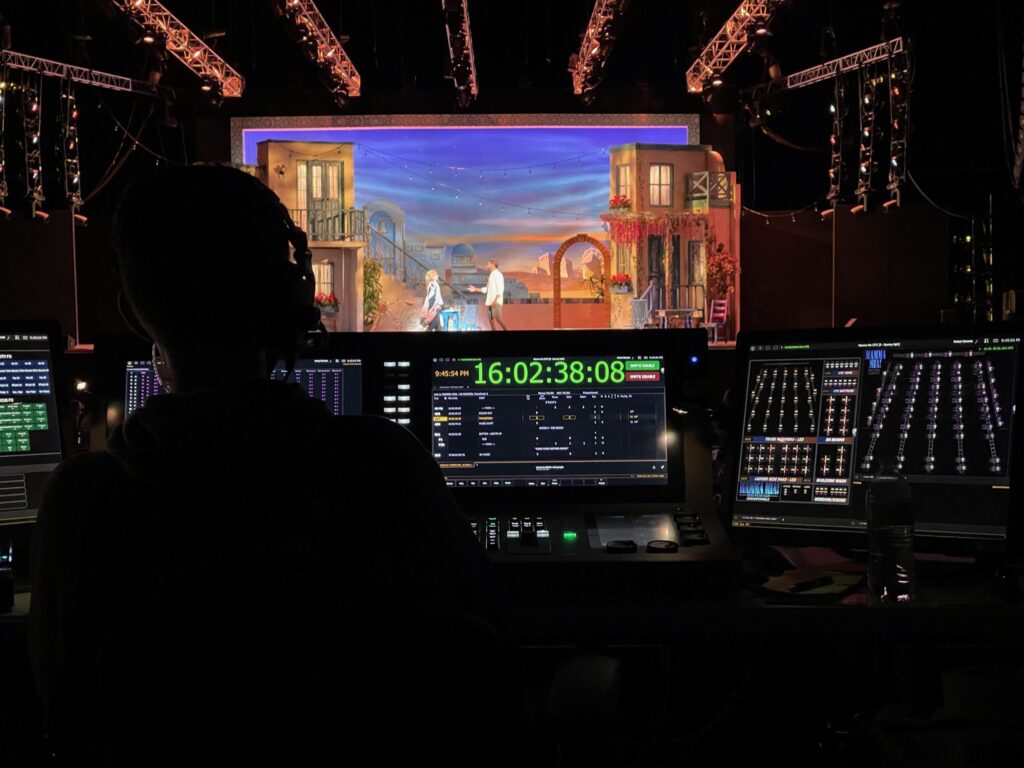
We're excited to announce the launch of an apprenticeship program for students and early-career professionals in the theatrical lighting industry who want to expand their knowledge in a hands-on, professional, and paid production environment.
Started quietly in 2021, the program has served five participants from higher-education institutions around the country. Now that we've honed it a bit more, we're excited to make it available to anyone who qualifies.
Testimonials
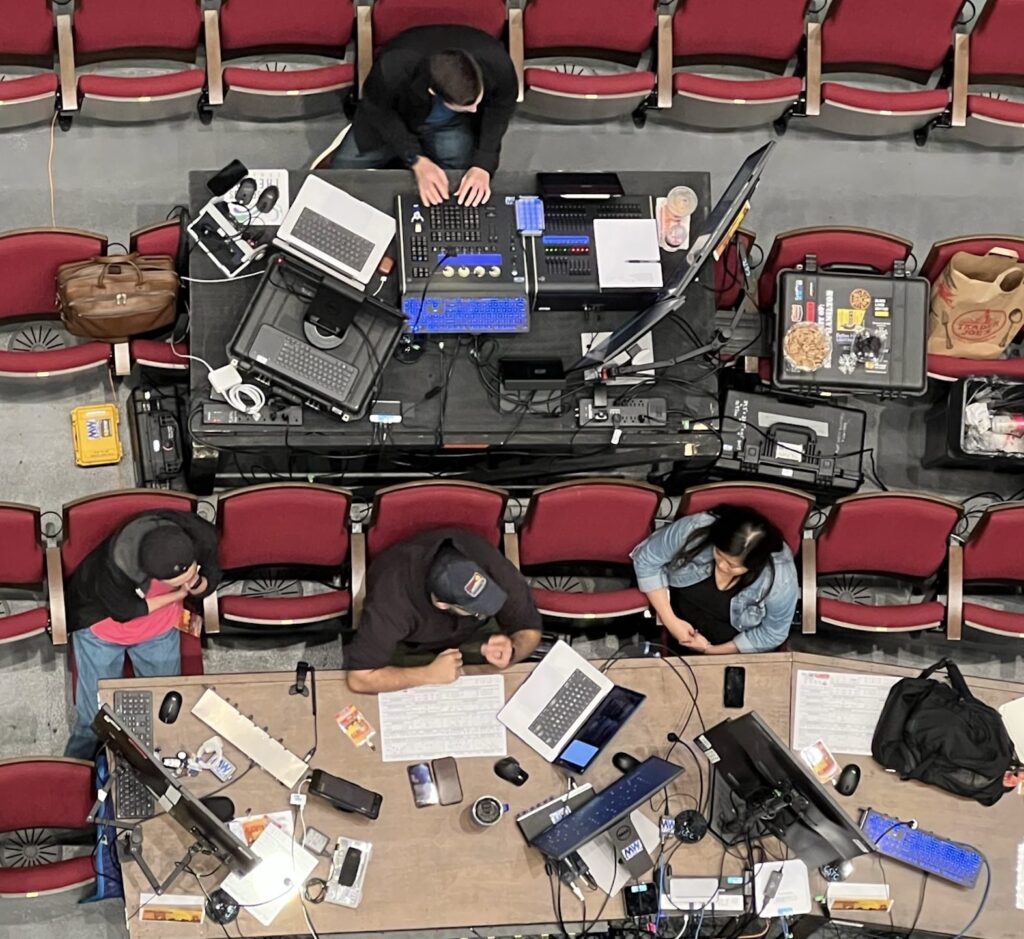
In The Heights was an amazing learning opportunity and experience that allowed me to advance my knowledge of design outside of the classroom and alongside industry professionals. I loved being able to focus and hone in on different aspects of design that I was wanting to learn more of and have a deeper understanding of.
Brad Fetter Apprentice, 2022 · The University of Tampa On In The Heights Personal site →
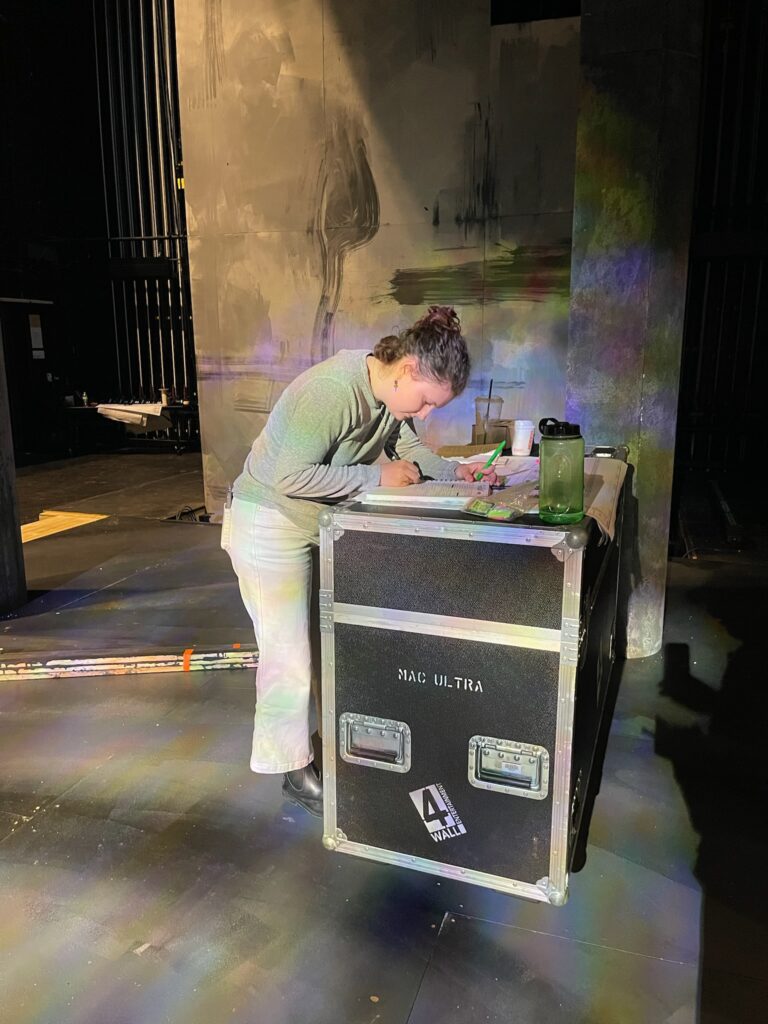
‘Fiddler on the Roof’ gave me the opportunity to observe the process of a designer I've admired for a while. The environment was incredibly inviting, which allowed me to really ask any question that I had. Everyone on the team was open to sharing their knowledge. The structure of this Apprenticeship allows for a plan of study to be crafted specifically to each Apprentice, with no experience being exactly the same.
Em Stripling Apprentice, 2023 On Fiddler on the Roof Personal site →
Previous Apprentices
Every cohort member since the program quietly began in 2021.
- 2022
Kristen Peck
- 2022
Dionte Mercado
- 2022
Brad Fetter
- 2023
Em Stripling
- 2024 Hannah Beerfas
FAQ
Oh yay, another unpaid internship!
Nope, not at all. All projects that are a part of this program are paid positions. We do not believe in unpaid internships, and neither should you.
What will I be doing?
Well, that will somewhat be up to you. Part of the application process is to tell us exactly what you want to learn as a part of this program.
We'll then look at a project that fits your interests and design a "course of study" that will help you fulfill those goals. For example, if you're really interested in learning how timecode works, we probably won't put you on a straight play. If you really want to learn how to call followspots, you won't work on a show without followspots.
View a sample course of study here.
You will have work and assignments to do to help the lighting team along the way, but overall this program exists to help you grow as a student and an artist.
It might be easier to tell you what you won't be doing, you won't be:
- Taking the place of a full-time crew or team member.
- Doing physical load-in, strike, or other technical labor.
- Getting everyone else's coffee (well, maybe when it's your turn, we all get each other coffee).
- Sweeping the stage.
How much time will this take?
Again, this is largely dependent on you as well as the project itself.
Before you officially sign on, we will come up with a firm schedule for your involvement with the project that works for you as well as the production and lighting team.
Worth noting is that typically the project dates listed end after the final dress/preview and are not inclusive of opening night. You'll receive two free tickets to opening night and to the opening night party (if there is one), but this time is not considered paid/billable time.
It is also possible that work will be performed by the lighting team at times that are not included in your agreement. You are not required, nor would you ever be asked, to attend calls that you are not being paid for. You are more than welcome to always be there to observe, but you will only be "working" according to the hours scheduled in your agreement. It is, of course, possible that we can add paid hours later in the process as time and budgets allow, but it is highly dependent on the particular project itself.
Is this REALLY paid?
Yes. Sometimes we might even buy your drinks after tech, too! (If you're old enough.)
Here's the deal. We want to create a program that is as equitable as possible for everyone. Unpaid internships only create opportunities for the most privileged of individuals and perpetuate a system that leaves incredibly talented individuals in the dust simply because they could not afford to take a week or two off from their lives, families, and responsibilities for no money.
The funding for this program comes from multiple sources: from MWLD, from theatre companies, from participating schools, and even from some key industry sponsors.
Talk more about the education.
The educational component of this program is mostly in the direct shadowing of various design team members, aligned with the desires and needs of the individual participant. Reading assignments might be given in the weeks leading up to a project depending on the nature of the position and the project.
Some examples:
A participant is very interested in learning about calling followspots, so they will be mostly assigned to work with the person on the team who is designing followspots for that particular production. They may be assigned reading from books like The Assistant Lighting Designer's Toolkit to complete before arriving onsite. While onsite, they might take notes for the assistant/associate pertaining to followspot work. If the rehearsals are going really well and the participant's skills allow, perhaps they will be allowed to call followspots for a song or sequence during a dress rehearsal. They will assist the assistant/associate in proofreading and creating followspot cue sheets.
A participant is interested in programming, especially with timecode and moving lights. They may split their time between the designer and the programmer, learning both about cue placement and timing as well as the actual programming syntax of cues and sequences. Onsite duties might be taking programming notes for the programmer or designer. If time allows, they might be allowed to program a few cues under supervision of the programmer.
A participant just wants to learn everything they can about anything they can. They spend a day or two shadowing each member of the lighting team and learning about their respective jobs and tasks, with general reading assignments in the weeks leading up to the onsite time.
In any situation, the participant would never be taking the place of one of the professional team members. Any jobs or tasks that you are asked to complete would typically be in tandem with the person that you are shadowing.
Where are the shows?
It varies: we try to get each company/theatre we work at to support the program, which means there are opportunities all over the country. Upcoming shows with slots will always be posted below on this page.
While Mike works full time for City Springs Theatre Company in Atlanta, this program is not affiliated with CSTC.
Do you provide housing and travel?
Sometimes, it all depends on the individual project right now, but we hope to be able to offer full travel and housing benefits in the future as this program grows. We are talking with several industry companies about potential sponsorships, travel stipends, and housing accommodations. If you want to help sponsor this program, get in touch today!
Currently, travel is handled on a case-by-case basis. If a project includes or excludes travel, it will indicate that with the listing.
Some schools have had success in funding the travel component for their students directly, and we're happy to chat with faculty who want to explore this!
Who would be my employer?
This will vary from project to project, but typically your employer will be Mike Wood Lighting Design; we use Wrapbook as our employer of record and they handle all payroll taxes, worker's compensation, etc. You will be asked to complete an NDA as a condition of employment.
I'm an aspiring electrician, can I apply?
Unfortunately this program is limited to the design and programming side of things. Our insurance doesn't cover physical production work, especially involving ladders, lifts, catwalks, etc.
Can I get class credit?
Yes! We've had students complete this program and receive college credit; it all depends on the requirements of the school, but we are able to develop and provide necessary documentation on a case-by-case basis. If you're a faculty member interested in this for your students, let us know!
I just graduated high school, is this for me?
While the program is open to anyone who meets the eligibility requirements (below), we encourage you to spend a year or two at school or working in the industry before you apply. That's not to say we won't take someone right out of high school; you'll just probably get a lot more out of the experience if you come in with a little more of a baseline.
Anything else I should know?
Please know that if you are not selected for a show, it typically has nothing to do with your skill level, portfolio, or talent. The goal of this program is to match apprentices with projects and teams that best suit their individual goals. Just because one show isn't right for you, doesn't mean that another won't be. Keep applying and stay in touch!
Eligibility
To be considered eligible for this program, you must be either:
- A. A student in an accredited college theatre program (undergraduate or graduate), of any age, or
- B. A working early-career professional at or under the age of 26.
Regardless of category, you must be at least 18 years old. It's recommended that you have at least a year or two of college or real-world experience before you apply, but that's not necessarily a dealbreaker.
How to apply
- Look for an upcoming project below that fits your interest, availability, and travel limitations.
- You can send a generic application, but you must resubmit every six months or so.
- Prepare your resume and portfolio. (PDF resume, portfolio website link or PDF upload.)
- Prepare a statement document introducing yourself, outlining your educational and professional goals, and telling us what you'd hope to learn or experience being a part of this program. This is important: it's how we'll get to know you. A generic cover letter won't suffice.
- Apply using this form.
- We'll reply to everyone who applies, but please note that as production schedules are always evolving, it might be a few weeks or more before you hear anything. Don't get discouraged, but also know that we anticipate many applicants for very few slots right now. Please don't expect to hear anything until at least the application deadline for a particular project.
Applications are currently closed. The button will return when the next cohort opens.
Upcoming opportunities
More projects announced soon as they become available.